Bernard: The Slab Serif That Works for Vintage and Modern Design
There's a particular challenge in finding a typeface that feels both timeless and fresh. You need something with enough character to stand out, but versatile enough to adapt across different projects. Bernard is a compressed, condensed slab serif that manages to strike this balance beautifully. It carries a certain weight and presence—literally and figuratively—that makes it suitable for everything from craft brewery labels to sleek tech branding. If you've been searching for a font that bridges eras and aesthetics, this one deserves a closer look.
What Makes Bernard Visually Distinctive
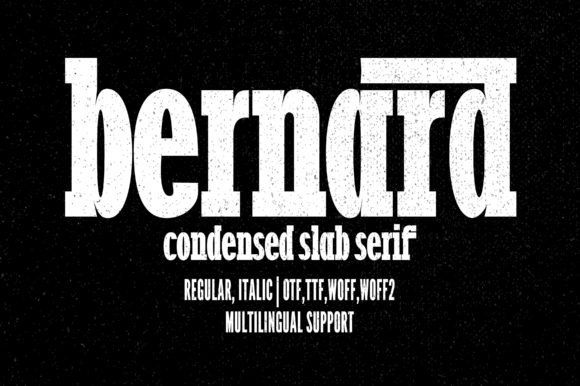
At its core, Bernard is a slab serif typeface with a compressed structure. The letters sit close together, which gives text a dense, impactful appearance. Slab serifs themselves are known for their blocky, sturdy terminals—the small strokes at the ends of letters—and Bernard leans into this quality without feeling heavy or outdated. The condensed form means you can fit more information into tighter spaces, which is incredibly useful for packaging, posters, and social media graphics where real estate is limited.
What sets this font apart from other slab serifs is its adaptability. Some slab serifs feel firmly rooted in the 1970s or scream "Western movie poster." Bernard doesn't lock you into a single era. Its clean geometry and balanced proportions allow it to feel equally at home in a vintage-inspired whiskey label and a contemporary magazine spread. The letterforms have just enough personality to be interesting without becoming distracting, which is exactly what you want from a display font that needs to do real work.
Where Bernard Shines in Real Projects
Let's talk about actual applications, because a font's value is ultimately measured by how well it performs in the wild.
Packaging design is one of Bernard's strongest use cases. Think about a shelf full of competing products. You have roughly three seconds to catch someone's eye. A compressed slab serif like Bernard commands attention through its bold, structured letterforms. It works exceptionally well for artisan food products, craft beverages, cosmetics, and specialty goods. The condensed width means product names and descriptions remain legible even on narrow labels or small packaging formats.
Logo design and brand identity benefit enormously from a typeface with this kind of presence. Bernard gives logos a grounded, confident feel without resorting to trendy effects or overly decorative elements. A small business owner building a brand from scratch can use Bernard as a primary typeface and build an entire visual system around it. The font's versatility means it adapts as the brand grows—from business cards and letterheads to website headers and storefront signage.
Poster and editorial design is another natural fit. When you're working with large-format layouts, you need a typeface that holds its structure at scale. Bernard's compressed form creates strong vertical rhythms and allows for dramatic typographic hierarchies. Pair it with a clean sans serif font for body text, and you've got a layout that looks polished and intentional.
Social media graphics present a unique typographic challenge. You're working with small dimensions, short attention spans, and the need for instant readability. Bernard's bold, condensed letterforms translate well to Instagram posts, Pinterest pins, Facebook headers, and YouTube thumbnails. The font maintains its character even at smaller sizes, which means your message stays clear across different devices and screen resolutions.
Website headers and digital products also benefit from this typeface. Blog titles, landing page headlines, ebook covers, and online course materials all need typography that communicates professionalism and intention. Bernard delivers this without requiring a complex typographic system. A single weight can carry a headline, and the font's inherent structure provides visual order that guides the reader's eye.
Pairing Bernard with Other Typefaces
One of the most practical aspects of working with any display font is understanding how it interacts with other typefaces in a design. Bernard pairs well with several categories of fonts, and the right combination depends on the mood you're trying to create.
For a clean, contemporary feel, try matching Bernard with a geometric sans serif. The contrast between the slab serif's texture and the sans serif's simplicity creates visual interest without chaos. This pairing works well for tech brands, modern retail packaging, and professional marketing materials.
If you're going for something warmer and more approachable, consider pairing Bernard with a subtle handwritten font or script font for accent text. This combination works beautifully for wedding invitations, boutique branding, and artisan product labels. The slab serif provides structure while the script adds a personal, human touch.
For editorial layouts and blogs, Bernard in headlines paired with a highly readable serif font or sans serif font for body text creates a classic, trustworthy hierarchy. This is a proven approach for magazines, newsletters, and content-heavy websites where readability across long passages matters.
The key principle with font pairing is contrast. You want the typefaces to complement each other, not compete. Bernard's compressed, structured character provides an excellent anchor point because it's distinctive enough to stand out but not so ornamental that it clashes with everything around it.
Practical Considerations Before You Start Designing
Before committing Bernard to a project, there are a few things worth thinking through.
Review the included font styles. Most premium font families come with multiple weights or variations. Understanding what's available helps you plan your typographic system more effectively. You might discover that a particular weight works better for digital applications while another excels in print.
Test readability at your intended size. Bernard's condensed form makes it excellent for headlines and display text, but like most display fonts, it may not be the best choice for long paragraphs of body copy at small sizes. Always set a test paragraph and evaluate it at the actual size it will appear in your final design.
Check the commercial licensing. If you're using Bernard for client work, merchandise, or products you plan to sell, make sure the license covers your intended use. Most premium font licenses distinguish between personal and commercial use, and some have specific terms for embedding fonts in digital products or applications. Reading the license agreement upfront prevents headaches later.
Consider your brand's existing visual language. If you're adding Bernard to an established brand system, make sure it aligns with the personality you've already built. A typeface should reinforce your brand identity, not work against it. If your brand currently leans heavily on minimalist sans serifs, introducing a bold slab serif might require a thoughtful transition rather than an abrupt switch.
Making the Most of a Creative Asset Like Bernard
A strong typeface is one of the most valuable design assets in your toolkit. It influences how people perceive your brand, how easily they read your content, and how professional your materials appear. Bernard offers a rare combination of visual impact and practical versatility. It works across vintage and modern contexts, adapts to both print and digital formats, and pairs well with a wide range of complementary typefaces.
Whether you're a designer building out a client's brand identity, a small business owner creating your own packaging, or a content creator looking for typography that makes your social graphics stand out, Bernard deserves consideration. The best way to understand what this font can do is to set some real text, experiment with different sizes and pairings, and see how it feels in the context of your actual projects. Good typography doesn't just look nice—it communicates, persuades, and builds trust. And that's exactly what a well-chosen font should do.