Gembool: A Playful Handwritten Font for Standout Designs
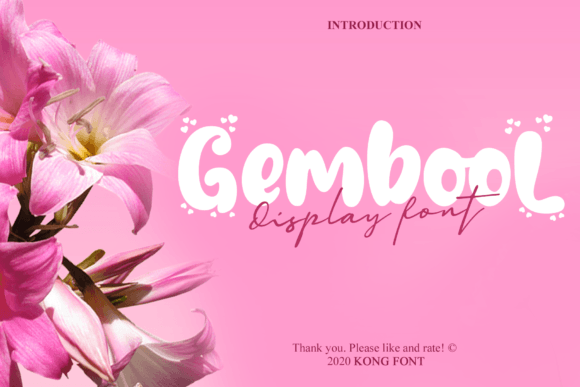
There's a certain magic that happens when you find a font that feels like it was made just for your project. You know the one—it clicks into place, transforms your layout, and suddenly everything looks intentional. That's the kind of energy Gembool brings to the table. This modern handwritten typeface strikes a balance between casual charm and polished versatility, making it a genuinely useful tool for anyone who works with visual content.
What sets Gembool apart from the crowded landscape of script fonts is its personality. It doesn't try to mimic a specific era or lean too heavily into trend-driven aesthetics. Instead, it offers a fresh, approachable look that works across a surprising range of applications. The letterforms have a natural flow without feeling sloppy, and the overall rhythm of the typeface keeps text readable even at smaller sizes. For designers and creators who need a handwritten font that doesn't sacrifice clarity for character, this is worth a closer look.
Where Gembool Really Shines in Real Projects
Think about the last time you scrolled through social media and stopped on a post because the typography caught your eye. Chances are, it was a handwritten or script font that created that instant connection. Gembool excels in exactly these kinds of situations. Use it for Instagram quote graphics, Pinterest pins, or Facebook ad headlines, and you'll notice how quickly it draws attention. The playful energy of the letterforms creates an emotional response that more traditional typefaces simply can't replicate.
For small business owners working on packaging design, this font offers a practical advantage. A handwritten aesthetic on product labels, box designs, or shopping bags communicates warmth and authenticity—qualities that consumers actively seek out. Whether you're selling handmade candles, artisanal food products, or boutique skincare, Gembool can help your packaging tell a story before anyone reads a single word of copy. Pair it with a clean sans serif font for product descriptions, and you've got a visual hierarchy that looks both professional and personal.
Logo design is another area where this typeface holds its own. Now, a handwritten font won't be the right choice for every brand identity, but for businesses that want to project approachability, creativity, or a handcrafted ethos, Gembool fits naturally. Think bakeries, florists, lifestyle blogs, children's brands, or creative agencies. The key is matching the font's personality to the brand's voice. When those two things align, the result is a logo that feels authentic rather than forced.
Getting the Most Out of Every Glyph and Swash
One of the most practical features of Gembool is its PUA encoding. If you've ever downloaded a decorative font only to find that half the alternate characters were inaccessible, you know how frustrating that can be. PUA encoding means every glyph, swash, and stylistic alternate is available through standard character maps and design software. No special plugins, no workarounds. Open Photoshop, Illustrator, Silhouette Design Studio, or even a basic word processor, and the full character set is right there.
This matters more than you might think. Those extra swashes and alternate letterforms are what allow you to customize the look of your typography without switching fonts. Maybe you want the capital "G" in your headline to have a more dramatic flourish, or perhaps the standard lowercase "t" feels too plain for your wedding invitation. With full glyph access, you can swap individual characters until the text looks exactly right. It's a small detail that makes a significant difference in the final result.
Pairing Gembool with Other Typefaces
A handwritten font rarely works in isolation, especially when you're designing something that requires longer blocks of text. The real power of a display font like Gembool comes alive when you pair it thoughtfully with complementary typefaces. A classic approach is combining it with a simple serif font for body copy—the contrast between the organic, flowing script and the structured serif creates visual interest while maintaining readability. Alternatively, a geometric sans serif can provide a modern counterpoint that keeps the overall design feeling fresh and balanced.
Here's a practical tip: before committing to a font pairing, test it at the actual sizes you'll be using. A combination that looks beautiful at 72 points on your screen might fall apart when rendered at 12 points in a printed brochure. Zoom out, squint a little, and ask yourself whether the hierarchy is clear. Can you immediately tell which text is the headline and which is the supporting copy? If the answer is yes, you've found a pairing that works.
Commercial Use and Licensing Considerations
For anyone planning to use Gembool in client work, merchandise, or products for sale, understanding the licensing terms is essential. Most premium fonts come with specific guidelines about how they can be used commercially, and ignoring those terms can lead to legal headaches down the road. Before you incorporate any typeface into a logo that will appear on thousands of t-shirts or a digital product you plan to sell repeatedly, take five minutes to read the license. It's the kind of due diligence that separates professional designers from hobbyists—and protects your business in the long run.
On the technical side, Gembool's compatibility with popular design tools means you won't run into workflow issues. It works seamlessly in Adobe Photoshop, Illustrator, InDesign, and also plays nicely with Silhouette Design Studio, which is a major plus for crafters who use cutting machines. Whether you're creating SVG files for a Cricut project, designing a social media template in Canva, or laying out a print-ready poster in Illustrator, the font integrates smoothly into your existing process.
Practical Applications Worth Exploring
If you're wondering exactly where Gembool might fit into your creative toolkit, here are some specific scenarios worth considering:
- Wedding invitations and event stationery – The handwritten style adds a personal, romantic touch that formal typefaces can't match.
- Blog headers and featured images – Stand out in a crowded feed with typography that feels human and approachable.
- Digital product covers – Ebooks, printables, and online course materials benefit from a font that signals creativity.
- Branded marketing materials – Business cards, flyers, and promotional posters gain personality without losing professionalism.
- Merchandise and apparel – Tote bags, mugs, and t-shirt designs often rely on bold, expressive typography to sell.
- Email headers and newsletter graphics – Add visual warmth to your email marketing without overwhelming the layout.
The versatility of a well-crafted handwritten font like Gembool means you're not locked into a single use case. That flexibility is especially valuable for freelancers and small business owners who wear multiple hats and need design assets that work hard across different contexts.
Final Thoughts on Making This Font Your Own
At the end of the day, a font is only as effective as the design decisions surrounding it. Gembool gives you a strong starting point with its modern handwritten aesthetic and full glyph access, but the real impact comes from how you use it. Experiment with sizing, play with color, test different pairings, and don't be afraid to push the boundaries of what you'd normally try. The best designs happen when you understand your tools well enough to use them with intention—and having a reliable, character-rich typeface in your library makes that process a whole lot easier.