Hopstely: Where Authentic Handwriting Meets Modern Design
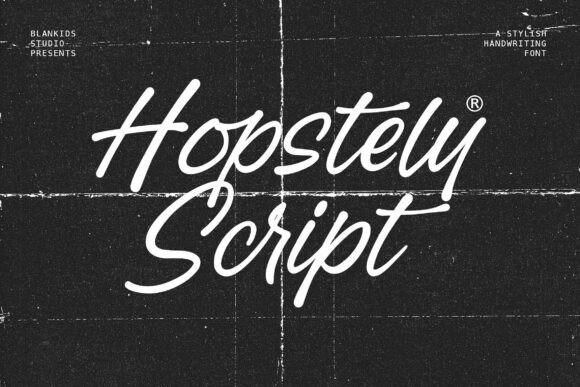
There’s a reason handwritten fonts never go out of style. In a world saturated with polished, digital perfection, the slight imperfection of a hand-drawn letterform cuts through the noise. It feels personal, authentic, and unmistakably human. That’s exactly the space Hopstely occupies—a modern handwritten script font designed not just to look beautiful, but to feel genuine. With its smooth curves and carefully crafted pen strokes, it bridges the gap between casual warmth and professional polish, giving designers and creators a versatile tool for projects that need to connect on a human level.
The Anatomy of a Typeface with Character
What sets Hopstely apart from the hundreds of other script fonts available? It’s in the details. The letterforms are built on a foundation of authentic handwriting, but they’ve been refined for consistency and readability. The strokes flow naturally, mimicking the rhythm of real pen on paper, yet they maintain enough structure to avoid looking messy or amateurish. This balance is crucial. A font that’s too loose can undermine credibility; one that’s too rigid loses the organic charm that makes handwritten styles so appealing.
Hopstely includes a full set of uppercase and lowercase letters, numerals, and a comprehensive range of punctuation and special characters. Many premium fonts in this category also offer stylistic alternates—subtle variations of certain letters that can be swapped in to add even more natural variation and prevent the text from looking repetitive. When exploring Hopstely for a project, take a moment to review the included font styles and alternates. Understanding what’s available allows you to make intentional choices that enhance the overall aesthetic rather than settling for defaults.
Practical Applications: From Brand Identity to Product Packaging
A font’s true value is measured by how well it performs across different contexts. Hopstely shines in applications where personality and approachability are key. Consider its role in logo design. A strong wordmark sets the tone for an entire brand identity. Using Hopstely for a bakery, a boutique consultancy, or a lifestyle blog immediately communicates warmth and creativity. Pair it with a clean sans serif for body text, and you have a visual system that feels both distinctive and professional.
For small business owners and entrepreneurs, packaging design is another area where typography makes a tangible difference. A handwritten font on a product label, a thank-you card, or a shopping bag creates a tactile, artisanal impression. It suggests care and attention to detail—qualities that resonate with customers. Hopstely’s natural flow makes it particularly effective for packaging that aims for an organic, handmade, or premium feel without sacrificing legibility.
Social media graphics demand fonts that are instantly recognizable even at small sizes or in fast-scrolling feeds. Hopstely’s clear letterforms and distinctive style help posts stand out in crowded timelines. Use it for quotes, promotional announcements, or story overlays to add a personal touch that feels more like a conversation than a corporate broadcast. Similarly, for websites and blogs, incorporating Hopstely into headers or pull quotes can break the monotony of standard web fonts, adding visual interest and guiding the reader’s eye.
Building Visual Consistency Across Your Projects
One of the most overlooked aspects of typography is its role in creating cohesion. When you use the same typeface across multiple touchpoints—from your website to your printed materials, from your email newsletters to your merchandise—you reinforce brand recognition. Every interaction with your audience becomes a subtle reminder of who you are. Hopstely, as a distinctive yet versatile script font, can serve as a consistent visual thread that ties disparate elements together.
This doesn’t mean using it everywhere. Effective typography is about strategic application. Reserve Hopstely for moments where you want to inject personality: a hero section on your homepage, the title on an event poster, the header on a digital product PDF. For body copy, pair it with a highly readable serif or sans serif font. This contrast not only improves readability but also creates a visual hierarchy that makes your content easier to navigate. The goal is harmony, not uniformity.
Choosing the Right Font for the Job
Not every project calls for a handwritten script. Context is everything. Hopstely is ideal for designs that aim to feel approachable, creative, or intimate. Think wedding invitations, artist portfolios, indie brand packaging, or lifestyle blog graphics. It might not be the best choice for a legal document, a technical manual, or a corporate annual report—situations where clarity and formality are paramount. Understanding the emotional tone of your project is the first step in selecting the right typeface.
Once you’ve decided a script font fits the brief, testing is non-negotiable. Don’t just look at a specimen sheet in isolation. Set your actual headlines, taglines, or key messages in Hopstely. View it at the sizes it will appear in your final design—both large and small. Check how it renders on different screens and in print. Readability should never be sacrificed for style. If a font looks stunning but forces your audience to squint, it’s not serving its purpose.
Font pairing is another critical skill. A general rule of thumb is to combine a expressive font like Hopstely with something more neutral and structured. A geometric sans serif or a classic serif can provide the necessary contrast. Experiment with different combinations. Does Hopstely work better with Montserrat or with Lora? The answer depends on the overall mood you’re crafting. Many design resources and font libraries offer pairing suggestions, but ultimately, your own eye and project goals should guide the decision.
Licensing and Commercial Use: What You Need to Know
Before incorporating any font into a commercial project, understanding the licensing terms is essential. Most premium fonts, including quality script fonts like Hopstely, come with a license that specifies how they can be used. A common distinction is between desktop licenses (for creating static images, logos, and print materials) and webfont licenses (for embedding the font on websites). If you’re creating merchandise—like t-shirts, mugs, or posters—for sale, you’ll typically need a license that covers commercial use and may have limitations on the number of products or impressions.
Always read the license agreement provided by the font’s creator or distributor. Reputable foundries and marketplaces are transparent about these terms. Using a font without the proper license can lead to legal complications, especially if your project gains significant traction. When in doubt, reach out to the provider. It’s a small step that protects your work and supports the designers who create the tools we rely on.
In the end, a font is more than just a collection of letters. It’s a voice. Hopstely offers a voice that’s warm, confident, and distinctly human—a voice that can help your designs speak directly to the people you’re trying to reach. Whether you’re building a brand from scratch or refreshing an existing one, integrating a thoughtfully chosen typeface into your toolkit is an investment in clarity, personality, and connection.