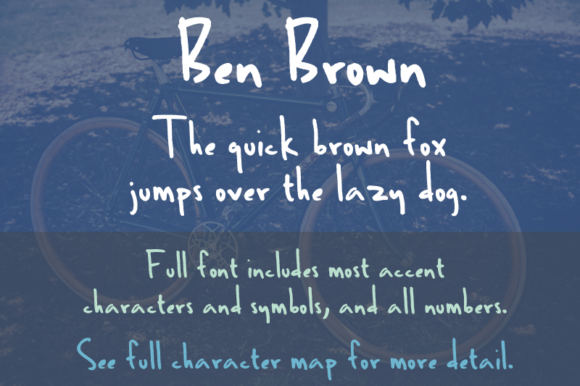
Ben Brown: The Handwritten Font with a Personal Story
There’s something special about a font that carries a bit of history. Ben Brown isn’t just another typeface; it’s a digitized piece of family heritage. Created from the neat, consistent handwriting of the designer’s older brother back in October 2000, this font brings a human touch that’s hard to replicate. Over the years, it’s been carefully updated with new characters, including accents, making it a versatile tool for modern creators. If you’re tired of sterile, impersonal fonts and want something with genuine warmth and personality, Ben Brown might just be the creative asset you’ve been looking for.
A Typeface with Character and Clarity
What makes Ben Brown visually appealing is its balance. It’s clearly a handwritten font, but it’s not messy or overly casual. The letterforms are neat, legible, and flow with a natural rhythm that feels authentic. This isn’t a script font trying to look handwritten; it’s the real thing, refined into a usable typeface. The consistency in the stroke weight and the thoughtful spacing between letters make it surprisingly readable, even at smaller sizes. For designers, this means you can use it for more than just a headline or logo—you can incorporate it into body copy on invitations, product labels, or social media graphics without sacrificing clarity. It bridges the gap between the charm of a script font and the reliability of a sans serif font in terms of readability.
Practical Applications for Real-World Projects
The true value of a creative font like Ben Brown lies in its versatility. Let’s break down where it can truly shine and add that much-needed personal touch to your work.
- Brand Identity & Logo Design: For small businesses, especially those in lifestyle, craft, food, or boutique retail, a handwritten font can instantly communicate approachability and authenticity. Using Ben Brown in your logo or tagline can make your brand feel more human and relatable, helping you stand out in a crowded market.
- Packaging & Product Design: Imagine a artisanal coffee bag, a homemade candle label, or a gourmet jam jar. The neat, personal script of Ben Brown adds a layer of perceived care and quality. It suggests a product made with attention to detail, which can directly influence a customer’s purchase decision.
- Social Media Graphics & Content: In the fast-scrolling world of Instagram or Pinterest, a touch of personal typography can stop the scroll. Use it for quote graphics, story highlights, sale announcements, or even as a watermark. It adds visual warmth that helps your content feel more engaging and less corporate.
- Web Design & Blogs: While you wouldn’t use a display font like this for long paragraphs, it’s perfect for section headers, pull quotes, author signatures, or navigation menu items on a blog. It can break the monotony of standard web-safe fonts and inject personality into your site’s design.
- Print Materials & Invitations: From wedding invitations and thank-you cards to business flyers and event posters, Ben Brown excels where a personal, elegant touch is desired. Its clarity ensures important details like dates and addresses remain easy to read.
- Digital Products & Marketing Assets: If you sell e-books, worksheets, or online courses, using a consistent, friendly font like this throughout your materials can enhance the user experience. It makes digital products feel more polished and professionally crafted, boosting their perceived value.
Integrating Ben Brown into Your Design Workflow
Adopting a new premium font is more than just a download; it’s about strategic implementation. Here’s how to think about using Ben Brown effectively.
First, consider font pairing. A handwritten font pairs beautifully with a clean, neutral sans serif font or a classic serif font. For example, use Ben Brown for your main headline and pair it with a font like Open Sans or Lora for the body text. This contrast creates visual hierarchy and keeps the design grounded and professional. Avoid pairing it with another decorative or script font, as that can lead to visual chaos and poor readability.
Second, think about your project’s goals. What feeling are you trying to evoke? Trust? Creativity? Nostalgia? The personal, story-driven nature of Ben Brown is perfect for brands that value connection, craftsmanship, and authenticity. It’s less suited for ultra-modern, tech-heavy, or highly formal corporate identities, but ideal for everything from a local bakery’s menu to a lifestyle blogger’s e-book cover.
Third, always test for readability. While Ben Brown is remarkably legible for a script font, context is everything. Test it at the size and on the medium you plan to use. A beautiful header on your screen might become a blurry line on a small product tag. Check the included character set; with its updates, it likely includes essential punctuation and accented characters, which is crucial for multilingual projects or specific brand names.
Finally, respect the license. As a commercial font, ensure you understand the terms of use, especially if you’re creating assets for clients or for merchandise you intend to sell. Investing in the proper license not only supports the creator but also protects your projects legally.
More Than Just Letters
In a digital landscape saturated with perfect, geometric vectors, Ben Brown offers a refreshing alternative. It’s a design asset with a soul—a piece of modern typography rooted in a real, human story. Whether you’re a designer looking for a distinctive display font for a client, a small business owner building a brand identity, or a content creator crafting social media graphics, this typeface provides a tool to communicate with warmth and sincerity. It reminds us that the best design often feels personal, and the right font can do more than just display words; it can tell a story before the first sentence is even read.